
You finish a client project, send the invoice, and get paid. It’s a straightforward exchange: time for money. But what happens when you stop trading your time? The ceiling on your freelance web developer income suddenly vanishes. This is the transformative power of passive income. It’s not about getting rich quick; it’s about building assets that generate revenue while you sleep, take a vacation, or work on other projects. Consequently, this guide is your blueprint for diversification. We will explore ten proven strategies to create digital products, templates, and subscription services that can dramatically boost your web developer income. Therefore, let’s shift your mindset from a sole earner to a wealth-building entrepreneur.
The “Why”: Beyond the Time-for-Money Trap
Relying solely on client work is a volatile strategy. Projects dry up, clients delay payments, and burnout is a constant threat. Passive income, however, creates financial stability and freedom.
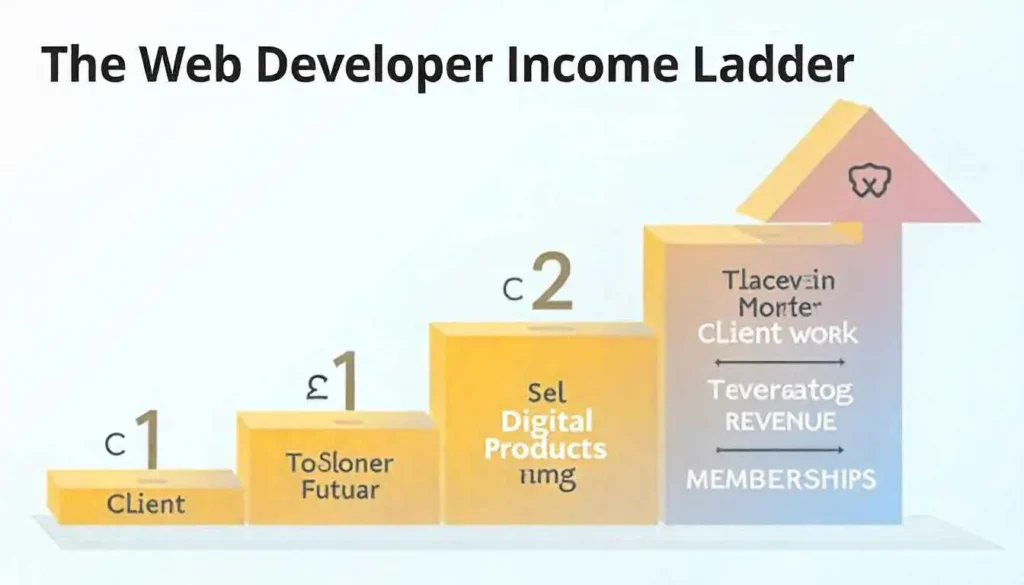
Firstly, it diversifies your revenue streams. Instead of one primary source of freelance web developer income, you have multiple. This protects you during slow seasons. Furthermore, it allows you to monetize your expertise in scalable ways. The code you write once can be sold hundreds or thousands of times. Ultimately, building these assets is an investment in your future self, creating a business that works for you.
The Mindset Shift: From Freelancer to Digital Product Owner
The key is to start thinking like a product manager, not just a code executor. Your skills, problem-solving, understanding user needs, and building effective solutions, are your greatest assets. You simply need to productize them. For more about 10 Passive Income Streams to Boost Your Web Developer Income, explore UpMenu.

The Digital Product Powerhouse
This category involves creating a product once and selling it repeatedly with minimal ongoing effort.
1. Premium WordPress Themes or UI Kits
Your ability to create clean, functional layouts is in high demand. Instead of designing a custom theme for one client, create a premium, multipurpose theme and sell it on marketplaces like ThemeForest or via your own website.
- Why it works: The demand for well-coded, aesthetically pleasing themes is perpetual. Small businesses and agencies are always looking for a head start.
- How to start: Identify a niche (e.g., restaurants, consultants, e-commerce) and build a theme that solves common problems for that audience. Focus on excellent documentation and support.
2. Website Templates and Starter Kits
Not everyone uses WordPress. You can create static site templates for frameworks like Next.js, Gatsby, or Hugo. Similarly, “starter kits” that include a pre-configured build process, authentication, and a UI library are incredibly valuable.
- Why it works: You save other developers hours of setup time. They are willing to pay a premium to jumpstart their own projects.
- How to start: Package a project you’ve built for a client (after removing sensitive data) into a generic, reusable template. Sell it on Gumroad or your own site.
3. Educational E-Books and Video Courses
You possess knowledge that others are eager to learn. Package it! Create a deep-dive course on a specialized topic like “Headless WordPress with Next.js” or “Building a SaaS with Laravel.”
- Why it works: The “learn to code” market is massive, and intermediate developers are always seeking to upgrade their skills.
- How to start: Choose a topic you’re truly expert in. Outline the curriculum meticulously, then use screen recording software to create the videos. Platforms like Teachable or Udemy are perfect for hosting.
The Recurring Revenue Engine
This model focuses on building a steady, predictable web developer income through subscriptions.
4. Build a Micro-SaaS (Software as a Service)
This is one of the most powerful ways to generate passive income for developers. Identify a small, specific problem and build a web app to solve it. Examples include a subscription tracking API, a broken link checker, or an internal tool for social media scheduling.
- Why it works: It creates a high-value, recurring revenue stream. Even a simple tool at $10/month can generate significant income with a few hundred users.
- How to start: Solve your own problem. What small tool would make your freelance life easier? Build that. Use a stack you’re familiar with to launch a Minimum Viable Product (MVP) quickly.
5. Premium Plugins or Extensions
If you have expertise in a specific platform like WordPress, Shopify, or Chrome, you can develop and sell a premium plugin or extension.
- Why it works: You leverage an existing user base that is already looking for solutions to enhance their platform.
- How to start: Look for feature requests in the free plugin repositories. A highly-requested feature that is complex to build could be the foundation for your premium version.
6. A Members-Only Content Library
Your expertise is valuable. Create a library of reusable code snippets, advanced tutorials, or component libraries and charge a monthly membership fee.
- Why it works: It provides ongoing value, encouraging customers to stay subscribed. It also builds a community around your brand.
- How to start: Use a platform like Memberful or Podia to manage memberships. Seed it with a dozen high-quality code components or tutorials before launching.
The Leveraged Assets Portfolio
These ideas use your existing skills and assets to generate income with little additional work.
7. Affiliate Marketing for Developer Tools
You already use and recommend hosting services (like DigitalOcean or Kinsta), code libraries, and SaaS tools. Sign up for their affiliate programs and earn a commission on sales you refer.
- Why it works: It requires no product creation. You’re simply getting paid for the recommendations you were already making for free.
- How to start: Integrate affiliate links naturally into your blog posts, YouTube videos, or project documentation. Always disclose the relationship transparently.
8. Monetize a Niche Blog or YouTube Channel
Create content that attracts a specific audience of developers or small business owners. Once you have traffic, you can monetize with ads, sponsorships, and the affiliate marketing mentioned above.
- Why it works: It establishes you as an authority, which can lead to higher-paying client work while also generating direct ad revenue.
- How to start: Pick a narrow niche you’re passionate about (e.g., “Animations with Framer Motion,” “E-commerce for Artists”). Consistently create helpful, in-depth content. For more on defining your niche, check out our guide on gillibilli.shop.
9. Sell Your Digital Assets on Marketplaces
Platforms like CodeCanyon, Creative Market, and UI8.net are built for developers to sell their digital creations, from HTML templates to JavaScript plugins.
- Why it works: These marketplaces bring the traffic to you. You can focus on building the product while they handle the marketing and transactions.
- How to start: Browse best-selling items to understand what’s in demand. Create a high-quality, well-documented asset that stands out.
10. Automated API Services
If you have backend expertise, you can build and sell access to a specialized API. This could be for data enrichment, image processing, or providing specific datasets.
- Why it works: APIs are the ultimate “set-and-forget” product if built correctly. They run automatically and can serve thousands of customers.
- How to start: Identify a data or processing need that isn’t well-served by giant providers like Google or AWS. Build a simple, reliable REST API and document it thoroughly.
Conclusion: Building Your Financial Future, One Product at a Time
In conclusion, boosting your web developer income is not just about raising your hourly rate. The most profound financial growth comes from building assets that generate value independently of your time. By starting with just one of these ideas, whether it’s a simple UI kit, a niche blog, or a micro-SaaS, you begin the crucial journey from a freelancer who trades hours for dollars to an entrepreneur who builds lasting wealth. Therefore, review this list, identify the idea that excites you most, and take the first small step today. Your future self will thank you for the financial security and freedom you create.
All images are generated by Freepik.
Frequently Asked Questions (FAQs)
Creating and selling a website template or UI kit is often the easiest entry point. It leverages your existing skills directly, you’re essentially productizing work you already do for clients. You can start selling on platforms like Gumroad with minimal overhead.
It varies greatly by the project. A simple template might take a week, while a robust Micro-SaaS could take several months to build and refine. The key is to view it as a long-term investment, not a quick fix. Consistent, small efforts compound over time.
Yes, many developers have replaced their full-time freelance web developer income with digital products and SaaS businesses. However, it rarely happens overnight. It requires building a quality product, effective marketing, and patient iteration. Most developers start by supplementing their client work.
Not necessarily. While an audience helps, a high-quality product in a specific niche can succeed through organic search, marketplace visibility, and word-of-mouth. A micro-SaaS solving a painful problem for a small group can be very profitable without a massive audience.
The key is to dedicate consistent, scheduled time. Even 5-10 hours per week dedicated to your product can lead to significant progress over a few months. Consider it a non-negotiable client named “My Future.” Many developers use the 80/20 rule: 80% on client work, 20% on building their own assets.
Pingback: The Freelancer's Guide to Building a Personal Website That Sells