
The clock ticks past midnight. Your screen glows, filled with code, designs, or words. This is the classic freelance reality. But now, a new presence shares your digital workspace, an artificial intelligence that can draft, design, and debug in seconds. This new reality sparks an urgent question: Is this the end of independent work, or a spectacular new beginning? The conversation about how AI is changing freelancing is everywhere, filled with both hype and fear. However, the truth is far more nuanced than a simple tale of replacement. Consequently, this guide cuts through the noise. We will explore the tangible ways AI is changing the freelancing landscape, not with abstract theories, but with specific tools, strategies, and adaptations. Therefore, let’s explore whether freelancers will be replaced or powerfully reinvented.
How AI is Changing Freelancing: The Two Sides of the Coin
To understand the future, we must look clearly at the present impact. AI is not a single force; it’s a collection of tools creating both pressure and opportunity.
On one hand, AI automates tasks that were once a freelance staple. For example, AI can now generate basic website code, create initial logo concepts, and write simple blog post drafts. Consequently, this puts pressure on freelancers who built their entire business on these foundational, repetitive tasks. A 2023 study by Upwork found that 49% of freelancers are already using AI in their work, demonstrating how quickly this shift is happening.
On the other hand, this automation is freeing up human creativity for more complex challenges. AI handles the tedious groundwork, allowing freelancers to focus on strategy, emotion, and unique problem-solving. Furthermore, AI is creating entirely new freelance niches, from prompt engineering for AI models to AI integration specialists. The key is to see AI as a powerful collaborator, not just a competitor.
The Rise of the AI-Augmented Freelancer
The most successful freelancers are no longer just experts in a single field. Instead, they are becoming “AI-augmented” professionals. They leverage AI tools to enhance their speed, quality, and service offerings.
A graphic designer might use Midjourney to rapidly generate mood boards and conceptual imagery for a client. Meanwhile, a web developer might use GitHub Copilot to write boilerplate code faster, reducing project timelines. Similarly, a copywriter can use GrammarlyGO or ChatGPT to overcome writer’s block and refine their tone. In each case, the freelancer’s expert judgment guides the AI, ensuring the final output meets a high standard of quality and originality.
Essential AI Tools for the Modern Freelancer
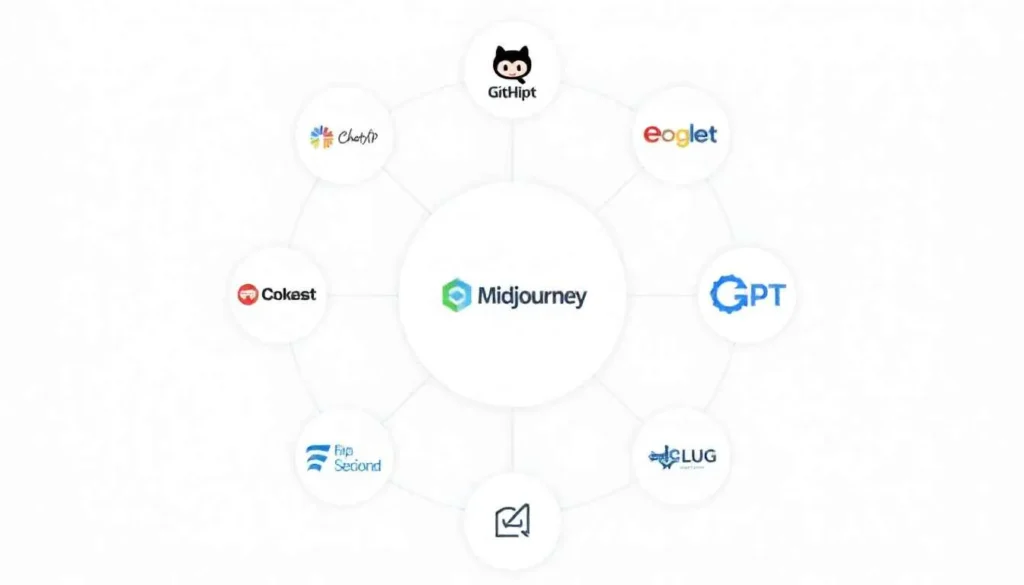
Staying competitive means knowing which tools to add to your arsenal. Here are some categories that are directly relevant to understanding how AI is changing freelancing on a practical level.
To Developers and Coders
- GitHub Copilot: This tool acts as a pair programmer, suggesting entire lines of code and functions as you type. It dramatically speeds up development and helps with learning new frameworks.
- Amazon CodeWhisperer: Similar to Copilot, it provides code suggestions and can help scan for security vulnerabilities.
- Replit AI: Integrated into the Replit environment, it assists in building, debugging, and deploying projects faster.
For Designers and Creatives
- Midjourney & Stable Diffusion: These image generation tools are incredible for conceptualization, creating assets, and exploring visual styles before committing to a final design.
- Adobe Firefly: Integrated into the Creative Cloud, it offers tools for generating images, text effects, and recoloring vectors directly within your familiar workflow.
- Uizard: This tool can rapidly transform hand-drawn wireframes into digital prototypes, speeding up the initial design phase.
For Writers and Marketers
- ChatGPT & Claude: Excellent for brainstorming ideas, creating outlines, and drafting initial copy that you can then refine and personalize.
- Jasper: A marketing-focused AI that helps generate campaign copy, social media posts, and blog content frameworks.
- Otter.ai: This transcription tool uses AI to automatically transcribe client meetings and interviews, saving hours of manual work.
Adapting Your Freelance Business for the AI Era
Knowing the tools is only half the battle. The other half is strategically adapting your business model, your services, and your client conversations.
Shift from Task-Doer to Strategic Partner
The value of simply “doing the work” is diminishing. The new value lies in your strategic oversight. Clients will increasingly hire you for your ability to guide the AI, curate its output, and apply human judgment.
Instead of selling “10 blog posts,” you might sell a “content strategy and oversight package,” where you use AI for drafting and focus your energy on editing, optimizing for SEO, and ensuring brand voice consistency. This positions you as a manager of the process, not just an executor of tasks. For more about finding Freelance Clients Without Upwork or Fiverr, visit our guide gillibilli.shop.
Specialize in AI Integration and Prompt Crafting
As AI is changing freelancing, it’s also creating new service offerings. Many businesses have the tools but lack the skill to use them effectively.
You can offer services as an “AI Integration Specialist,” helping clients weave AI tools into their existing workflows. Alternatively, become a “Prompt Engineer,” crafting the precise instructions that guide AI to produce high-quality, relevant results. This is a highly specialized and valuable skill that builds directly on your domain expertise. For more on building a future-proof skillset, explore our guide on Matt Olpinski
Double Down on Uniquely Human Skills
AI excels at pattern recognition and speed. It does not excel at empathy, ethical reasoning, or understanding nuanced human emotion. Therefore, your greatest assets are your soft skills.
- Complex Problem-Solving: Tackling ambiguous, multi-faceted problems that lack a clear dataset.
- Client Empathy and Communication: Truly understanding a client’s fears, goals, and unspoken needs.
- Ethical Judgment: Making decisions that consider fairness, bias, and long-term consequences.
- Creative Vision: Synthesizing disparate ideas into a truly novel concept.
The Verdict: Reinvention is the Only Path Forward
So, will developers and other freelancers be replaced? The evidence points decisively towards reinvention.

AI is automating the what of many tasks, but it cannot replicate the why behind great work. It can write code, but it cannot yet architect a complex, novel software solution based on a vague client idea. It can create a design, but it cannot ensure that the design resonates with a specific human audience on an emotional level.
The freelancers who view AI as a productivity multiplier will thrive. They will handle more projects, deliver higher-quality work, and offer more strategic value to their clients. Consequently, they will be able to command higher rates for their expert oversight and creative direction. The future belongs to the freelancer who is part-human, part-conductor of an AI orchestra. For more about AI freelancing, check out our guide on gillibilli.shop.
Conclusion: Embracing Your Augmented Future
The narrative around how AI is changing freelancing is ultimately a story about leverage. It is not about humans versus machines; it is about humans with machines versus humans without. The freelance landscape is being upgraded, and the choice to adapt is not optional. By embracing AI tools, shifting your mindset from doer to strategist, and cultivating your irreplaceably human skills, you are not just surviving this change, you are positioning yourself at its forefront. The future of freelancing is brighter and more full of potential for those willing to learn, adapt, and build alongside their new digital collaborators.
All images are generated by Freepik.
Frequently Asked Questions (FAQs)
No, AI is unlikely to completely replace skilled freelancers. Instead, it is automating repetitive tasks, allowing freelancers to focus on more complex, strategic, and creative work that requires human judgment, empathy, and problem-solving skills.
The most important skill is adaptability, followed closely by strategic thinking. The ability to learn new AI tools, understand their applications, and guide clients through the process of integrating them is becoming extremely valuable.
Frame your value around strategy, oversight, and customization. Explain that you use AI to increase efficiency and speed, which benefits them, but that your human expertise is what ensures the final product is polished, on-brand, and effectively meets their business goals.
Yes, entirely new roles are emerging. These include Prompt Engineer (specializing in communicating with AI), AI Integration Specialist, and AI Ethicist. These roles require deep domain knowledge combined with new AI skills.
Quite the opposite. By using AI to handle low-value tasks, you should be able to deliver higher-value outcomes faster. This efficiency and the strategic nature of your new role can justify maintaining or even increasing your rates.
Pingback: How to Use AI in Freelancing: A Strategic Guide to Thrive