
Imagine closing your laptop for the day, knowing that your next client inquiry is already sitting in your inbox. They didn’t find you on a crowded platform. Instead, they read an article you wrote, watched a video you made, or listened to a podcast you were on. They already understand your value, trust your expertise, and are eager to work with you. This isn’t a fantasy; it’s the direct result of a powerful, patient strategy called content marketing.
For freelancers, content marketing is the ultimate shift from chasing clients to attracting them. It’s about building a foundation of trust and demonstration before a single conversation about money begins. While others fight over low-budget projects, you can build a steady stream of clients who respect your work and pay your rates. Let’s explore how you can build a content marketing engine that works for you, even with limited time and a solo operation.
Why Content Marketing is a Freelancer’s Secret Weapon
You might think content marketing is only for big companies with large budgets. In reality, it’s perfectly suited for freelancers. At its core, content marketing is simply sharing your knowledge to build relationships. It answers the critical questions potential clients have before they even contact you.
The benefits are profound. First, it builds a know-like-trust factor at scale. A well-written case study does the convincing for you, long before you get on a call. Second, it dramatically improves your visibility online. By consistently creating content around your niche, you become more discoverable via Google and social media searches. Finally, it allows you to command higher rates. When you demonstrate your expertise publicly, you are no longer a commodity; you are a specialist and an authority.
Laying the Foundation: Your Content Marketing Cornerstones
Before you write a single post, you need a plan. Jumping in without a strategy leads to wasted effort and burnout. A solid foundation makes the entire process smoother and more effective.
Defining Your Niche and Ideal Client (Again)
Yes, we’re starting here. It’s that important. You can’t create compelling content for everyone. Your content must speak directly to the problems, desires, and language of one specific group of people.
Ask yourself: Who do I love working with? What specific problems do I solve for them? For example, instead of being a “freelance writer,” you could be a “freelance writer for B2B SaaS companies, specializing in creating case studies that generate sales leads.” This clarity informs every piece of content you create. You’ll know exactly what to write about because you know exactly who you’re helping.
For more information, visit The Wordling.
Setting Clear Goals for Your Content
What do you actually want your content to achieve? “Getting more clients” is a vague goal. Instead, think about specific objectives:
- Awareness: Do you want more people in your industry to recognize your name?
- Leads: Do you want your content to directly generate consultation requests?
- Authority: Do you want to be seen as the go-to expert for a specific service?
Your goals will shape your content. For lead generation, you might create detailed case studies. For authority, you might publish insightful commentary on industry news. Having a clear goal also helps you measure what’s working, so you can double down on successful strategies.
The Heart of Your Strategy: Finding Content Ideas That Resonate
The dreaded “blank page” is a common obstacle. However, when you see the world through the lens of your niche, content ideas are everywhere. Your goal is to answer every question your ideal client has.
Mining Your Client Interactions
Your past and current clients are a goldmine for content topics. Think about the questions they asked you during the sales process.
- What were their biggest fears about hiring a freelancer?
- What did they not understand about the process you guide them through?
- What results were they most desperate to achieve?
Each one of these questions is a perfect blog post or video topic. If one client asks it, dozens more are thinking it.
Answering Publicly Asked Questions
Use tools like AnswerThePublic, Google’s “People also ask” feature, or even niche-specific forums to see what your potential clients are searching for online. For a web developer, questions might be: “How much does a small business website cost?” or “What’s the difference between WordPress and a custom website?” Creating definitive answers to these questions positions you as a helpful guide.
For more on defining your niche, check out our guide on GilliBilli.Shop.
Sharing Your Process and Perspectives
Don’t be afraid to pull back the curtain. People hire freelancers because they want your brain and your process. Share it with them.
- Case Studies: This is your most powerful content format. Detail a client’s challenge, your step-by-step solution, and the tangible results. This is concrete proof of your ability.
- Think-Pieces: Share your opinion on a new trend or a common misconception in your industry. This shows you’re engaged and thoughtful.
- Project Teardowns: Analyze a public project (either your own or, ethically, a well-known one) and explain what works and what could be improved. This is incredibly educational and engaging.
Choosing Your Content Channels and Formats
You do not need to be everywhere. In fact, trying to master every platform is a recipe for burnout. The key is to choose one or two primary channels where your ideal clients spend their time and that play to your strengths.
The Power of Your Own Blog
Your website’s blog is your home base. You own and control this content completely. It’s the best platform for long-form, in-depth content like tutorials and case studies. Importantly, it’s also your primary tool for SEO. By consistently publishing helpful, keyword-rich content, you attract free, organic traffic from Google for months and years to come. For example, a blog post titled “The 5 Essential Pages Every Local Restaurant Website Needs” will attract exactly your target client.
Leveraging Professional Networks like LinkedIn
LinkedIn is a natural fit for B2B freelancers. It’s designed for professional content and networking. Here, your content can be shorter and more conversational.
- Write Articles: Use LinkedIn’s native publishing for longer thoughts.
- Create Engaging Posts: Share quick tips, insights from a project, or ask your network questions.
- Go Multimedia: Share short videos explaining a concept or image carousels breaking down a process.
The goal on LinkedIn is to start conversations and build your professional reputation.
Exploring Visual and Audio Formats
If writing isn’t your strong suit, lean into other formats.
- YouTube/Videos: Perfect for designers, developers, or coaches who can create tutorials, behind-the-scenes looks, or explainer videos.
- Podcasting: A fantastic way to build a deep rapport with an audience. You can interview clients or other experts in your field, boosting your own authority by association.
- Newsletters: An email newsletter allows you to build a direct, owned audience. You can send your latest blog posts, curated industry news, or exclusive tips directly to their inbox.
Building a Sustainable Content Workflow

Consistency is more important than frequency. Publishing one great article per month is far better than publishing four mediocre ones in a week and then burning out. The key is to create a system that fits into your busy schedule.
Batching Your Content Creation
Instead of writing a post from start to finish every week, try batching. Dedicate one afternoon a month to this process:
- Brainstorm: Generate 10-15 content ideas.
- Outline: Create detailed outlines for your top 4 ideas.
- Draft: Write the first drafts for all 4 pieces of content.
- Edit and Polish: On a different day, review, edit, and add images to all 4 pieces.
This method is far more efficient because it keeps you in a single “mode” of work, minimizing the mental cost of task-switching.
Repurposing Your Pillar Content
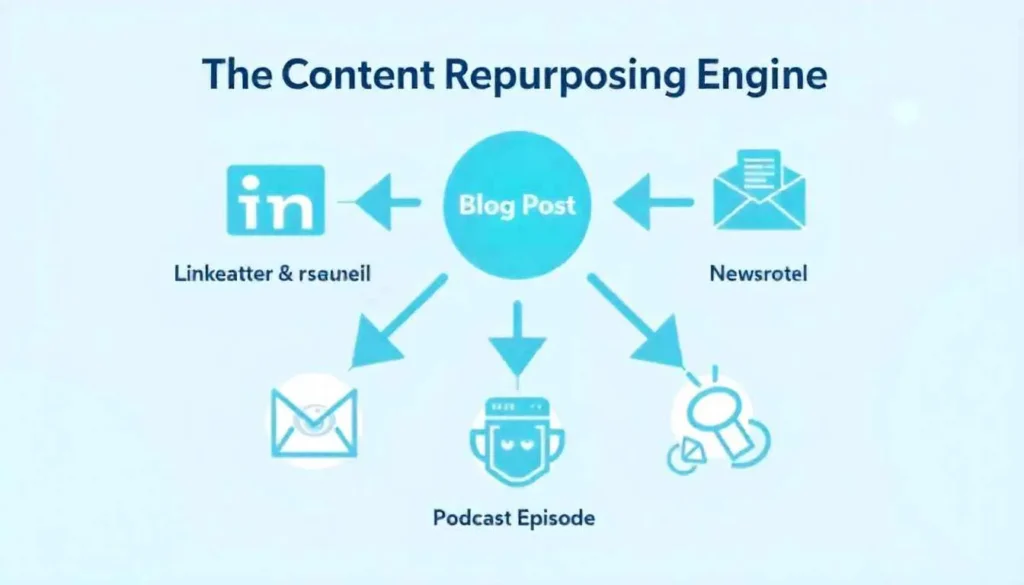
Never let a great piece of content die on one platform. A single pillar piece, like a detailed case study on your blog, can be broken down into dozens of smaller pieces.
- Turn key statistics into an Instagram or LinkedIn carousel.
- Extract a 60-second insight for a TikTok or YouTube Short.
- Use the main points as a thread on Twitter.
- Summarize the findings in your email newsletter.
This “create once, publish everywhere” approach maximizes your effort and extends the reach of your best work.
Measuring What Matters and Staying Motivated
Content marketing is a long-term game. You won’t see massive results overnight. That’s why it’s crucial to track the right metrics to see your progress.
Don’t just focus on vanity metrics like “likes.” Look at meaningful indicators:
- Website Traffic: Are more people visiting your site month over month?
- Newsletter Sign-ups: Are people willing to give you their email address?
- Inbound Inquiries: This is the ultimate metric. Are you receiving messages that start with, “I loved your article on…”?
When you get that first inquiry from someone who read your content, you’ll feel an incredible sense of validation. That client will already be sold on your expertise, making the sales process smoother and more enjoyable for everyone. That is the true power of content marketing for freelancers.
Frequently Asked Questions (FAQs)
Start small. Consistency trumps volume. Committing to one high-quality blog post or two LinkedIn posts per week is a perfect start. Using batching and repurposing strategies also saves a massive amount of time, making your efforts more efficient.
Content marketing is not exclusively about writing. If you’re a better speaker, start a podcast or create video tutorials. If you’re a designer, focus on visual platforms like Instagram or Dribbble, using captions to tell the story. Play to your strengths.
Patience is key. It typically takes 4-9 months of consistent effort to see significant traction, especially from SEO. However, you might get your first client from content within 6-8 weeks if you are strategic and promote your work effectively.
You don’t need a revolutionary new idea. You just need your unique perspective. Your process, your experiences with clients, and the way you explain complex topics are unique to you. Focus on being helpful, not on being revolutionary.
Absolutely. Giving away your knowledge freely is what builds trust and demonstrates your expertise. Clients hire you for your execution, not just your ideas. When you share valuable information, you prove you are capable and generous, making you the obvious choice when they need help.
Pingback: How to Find Freelance Clients Without Upwork or Fiverr
Pingback: How AI is Changing Freelancing: Replacement or Reinvention?
Pingback: 10 Passive Income Streams to Boost Your Web Developer Income