
The feeling of excitement when you finalize the deal with a new client and they say “yes” is magical. But what happens next is what distinguishes the successful freelancer from the dysfunctional freelancer. After they say “go”, you need to move on to formalizing the project; formalizing the project is the most important single step you can take. Relying on a handshake or a few back-and-forth emails is a recipe for confusion, scope creep, and delayed payment. This is where the freelance agreement template will be your business’s new best friend. The freelance agreement (contract) is not about displaying distrust; it is the foundation of a professional/trustworthy relationship. A freelance agreement will take vague ideas of understanding and turn them into clear, actionable plans, and will help define the responsibility for both you and your client. A solid freelance agreement template is the best protection against the pitfalls of freelancing, and will allow you to focus on your best work, knowing you have peace of mind.
The Non-Negotiable Value of a Freelance Agreement Template
Using a standardized contract is not just a best practice; it is a fundamental business operation. It signals that you take your work seriously and that you value your client’s time and investment.
Establishing Absolute Clarity and Expectations
A freelance agreement template forces you and your client to align on every detail before a single project begins. It answers all the critical questions: What exactly are you delivering? When is it due? How much will it cost? What happens if the project changes? This clarity prevents misinterpretations and ensures everyone is moving in the same direction from day one.
Protecting Your Business and Your Income
This document is your first line of defense. It legally outlines payment terms, including late fees, which encourages clients to pay on time. It also includes a scope of work, which protects you from the dreaded “scope creep”, when a client continuously asks for more work without additional pay. A contract makes these boundaries clear and enforceable.
Key Components of a Solid Freelance Agreement Template
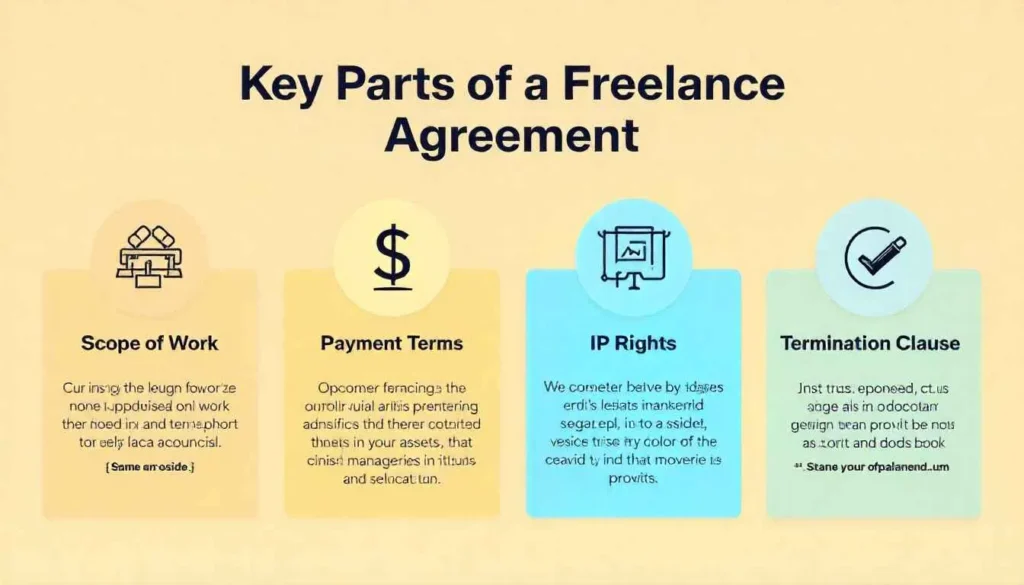
A powerful contract is comprehensive yet easy to understand. Every freelance agreement template you use should include these essential sections.
Project Scope and Deliverables Definition
This is the heart of your agreement. It must describe the work in specific, measurable terms. Instead of “writing blog posts,” specify “writing three 1,500-word SEO-optimized blog posts on topic X, including two rounds of revisions.” The more detail you provide, the less room there is for disagreement later.
Payment Terms and Schedule Details
This section leaves no room for financial ambiguity. It must state the total project fee, the payment schedule (e.g., 50% upfront, 50% upon completion), the due date for invoices, and the accepted payment methods. You should also outline your policy for late payments, such as a 1.5% monthly interest charge on overdue balances.
Intellectual Property and Revision Clauses
This part answers the critical question: Who owns the work? Typically, you transfer rights to the client once you have received full payment. The revision clause is equally important; it specifies how many rounds of changes are included in the initial price, preventing an endless cycle of unpaid edits. For more on structuring your business, see the guide to setting your freelance rates.
How to Customize Your Freelance Agreement Template
A template is a starting point, not a finished product. You must tailor it for each unique client and project.
<h3>Filling in the Project-Specific Blanks</h3>
For every new contract, meticulously fill in all the variable fields. This includes the client’s legal name, your business name, the project start and end dates, and the detailed scope of work. Double-check that all numbers, especially the project cost and payment amounts, are accurate.
Negotiating Terms with Your Client
Presenting the agreement begins a conversation. The client may want to adjust the revision limit or the payment schedule. Be open to reasonable negotiations, but stand firm on clauses that protect your core business interests, like your late payment policy or intellectual property transfer. For more on structuring your business, see our guide to gillibilli.shop.
Best Practices for Using Your Contract
Having a great freelance agreement template is only half the battle; you must use it consistently and correctly.
- Use it for Every Single Project: No exceptions. Even for small projects or friends. This builds a professional habit and prevents future issues.
- Get a Digital Signature: Use a service like DocuSign or HelloSign to obtain a legally-binding e-signature from your client before you start any work. This creates a clear record.
- Store Contracts Securely: Keep a signed copy of every agreement in an organized digital folder. You will need easy access for reference or if a dispute arises.
A Sample Freelance Agreement Template Structure
While you should have a lawyer review your final template, here is a foundational structure you can build upon.
1. Parties Involved: Identifies the Client (“Client Name”) and the Freelancer (“Your Business Name”).
2. Statement of Work: A detailed, bulleted list of all deliverables and project specifications.
3. Payment Terms: Total fee, deposit amount, final payment due date, and late fee policy.
4. Project Timeline: Key milestones, including start date, draft delivery date, and project completion date.
5. Revisions: The exact number of revision rounds included in the project price.
6. Intellectual Property: States that rights transfer to the client only after final payment is received.
7. Confidentiality: A clause ensuring that both parties will not share sensitive information.
8. Termination Clause: Outlines the conditions under which either party can end the agreement.
9. Signatures: Lines for both parties to sign and date.
Your Foundation for a Sustainable Freelance Career

Creating a strong freelance agreement template is one of the most empowering things you can do for your venture. It transforms worry into confidence and vagueness into structure. One document creates an entire wall of professionalism around your work, earning the respect you deserve and ensuring that you make money for what you do. It is really the foundation upon which you build great, long-lasting client relationships and a solid income as a freelancer. Don’t let another project begin before you get this. You will thank yourself for the security and clarity it gives you. Now that you’ve protected your work legally, make sure to have just as much structure in your creative process.
All images are generated by Freepik.
Frequently Asked Questions
Yes, a properly executed freelance agreement template is a legally binding contract between two parties, provided it includes an offer, acceptance, consideration (payment), and is signed by both the freelancer and the client.
While you can find many templates online and create your own, it is highly recommended to have a legal professional review it, especially if you work in a high-value or complex industry. This ensures it is enforceable and covers all necessary legal bases for your location and field.
A contract is the master agreement covering the overall terms of the relationship (payment, confidentiality, IP). A Statement of Work (SOW) is often an appendix that details the specific deliverables for a single project. They are often used together.
A client who refuses to sign a standard professional agreement is a major red flag. Politely but firmly explain that the agreement protects both of you and ensures a smooth project. If they still refuse, it is often best to walk away from the project to avoid potential payment or scope issues.
Be as specific as humanly possible. Use numbers and clear descriptions. Instead of “website design,” write “design of 5 key pages: Home, About, Services, Portfolio, and Contact, including 3 initial mockups and 2 rounds of revisions.” Detail prevents “scope creep.”
Pingback: The Contract Freelance: Your Essential Guide to Securing Every Project