
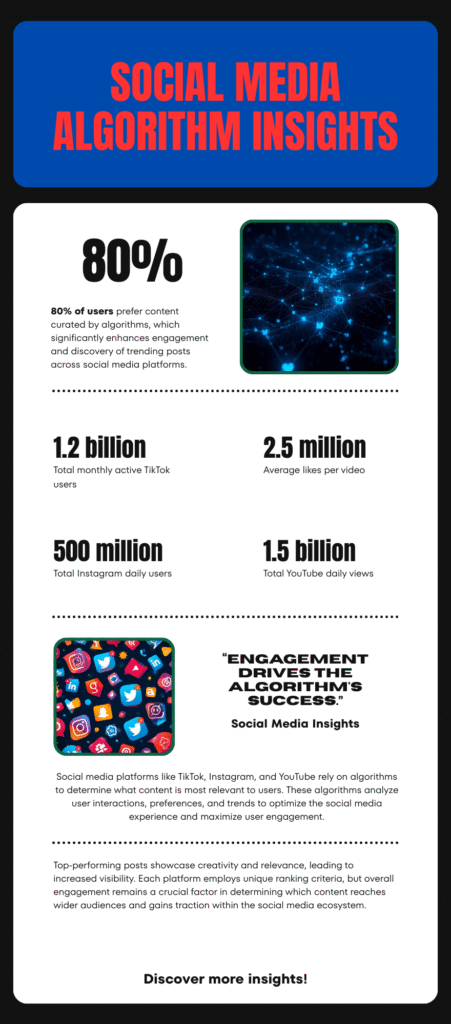
A video surfaces on a feed without warning. A post appears in Explore while another, posted minutes earlier, fades almost instantly. What users see on social platforms is no longer a simple stream of updates. It is the result of layered decisions made by ranking systems that predict interest, attention, and return behavior.
For marketers, this shift has changed the rules entirely. Visibility no longer comes from timing alone. It comes from alignment with how platforms interpret behavior at scale. Algorithms are not static tools. They evolve constantly, shaped by user habits, commercial pressure, and long-term retention goals. Understanding this evolution has become a requirement, not a competitive bonus.
This article looks at how social algorithms reached their current form, how major platforms rank content today, and how marketers can work with these systems without chasing shortcuts or gimmicks.
From Time-Based Feeds to Predictive Systems
Early social platforms relied on recency. The newest post appeared first, giving users a sense of control and immediacy. While this felt fair, it created problems quickly. Relevant content was often missed. Engagement clustered around specific time zones. Quality struggled to surface if timing was off.
As platforms scaled, this model became unsustainable. Ranking systems began to weigh interaction instead of time. Instagram shifted its feed in the mid-2010s. YouTube started prioritizing watch behavior years earlier. TikTok entered the market with a prediction built into its foundation.
The change marked a clear break. Platforms stopped treating content equally and started treating users individually. What appears in a feed is now selected based on what a system believes a specific person will engage with next.

How Engagement Is Interpreted Today
Engagement still matters, but its meaning has changed. A simple reaction no longer carries the same weight it once did. Social media no longer just monitors the movement of people in content but also the response to it.
Completion and re-watch behavior is a good indicator of a stronger interest in platforms that are visual than in rapid engagements. On video-heavy networks, how long someone stays, whether they continue scrolling, and whether they return later all shape distribution decisions. Subscription behavior and session length matter more than isolated actions.
Delayed behavior is more valuable in most instances than an instant response. A user who takes a break, scrolls away, and returns later sends a stronger message than the person who does this in a very fast manner and goes on.
The Role of Learning Systems in Ranking
Contemporary feeds are fuelled by dynamically evolving learning systems. These systems are used to test the content with small groups, monitor the distribution patterns, and modify the distribution.
Instead of using regular rules, platforms are based on the use of probability models. Each piece of content is evaluated based on how likely it is to hold attention, extend sessions, or encourage return visits. These predictions are revised with a change of behavior.
To the marketers, this implies that strategies become obsolete at a fast pace. The last quarter was successful, and what was successful might fail due to changes in user behavior or platform incentives. Sustainable visibility is based on the following trends, rather than imitating strategies.
Content Fit Matters More Than Format Tricks
The algorithms give preference to the content that fits well into the consumption habits of people using a particular platform. Short and loopable videos are effective in the context where rapid consumption is relevant. The longer content does well in the place where viewers want to remain. Consistency also matters.
Regular publication patterns enable the systems to know who the content is aimed at and when it should be published. Meaningful interest and fleeting attention are so far apart by their depth of interaction. Social media is likely to silence content that is disruptive or too promotional. The content that becomes part of the native consumption patterns may move further even without the use of violent appeals to action.
Timing, Trends, and Momentum
Trends continue to be relevant, but will work differently across platforms. Some systems react fast to new topics, magnifying initial signals.
Others change at a slower rate, balancing the trend relevance and long-term interest. There is the factor of timing, and timing affects early exposure. The initial hours of publication usually define the extent of content sharing.
Initiating early is moreof a signal that is tested and not determined. The greatest advantages are gained when trend participation is based on brand voice and not on visibility at any rate.
Signals Beyond Visible Interaction
Ranking systems now consider factors users rarely notice. Device type, viewing environment, session depth, and content diversity all influence recommendations. These signals help platforms avoid repetition and maintain satisfaction.
Understanding intent at this level allows platforms to balance familiarity with novelty. For marketers, it reinforces the importance of varied yet coherent content strategies.
Ethics, Policy, and Long-Term Reach
The responsibility of algorithmic amplification. Systems are constantly being modified by platforms to minimize harmful trends, misinformation, and low-quality interactions.
Any content based upon deceit or exaggerated hooks can work in the short-term, but, in most instances, will activate repression in the long term. Green access is not driven by exploitation but trust.
The momentum, but not spikes are built by marketers, who adhere to the rules and expectations of the platform.
Practical Guidance Without Over-Optimization
Social algorithms tend to be effective when it comes to two principles. To begin with, the initial interactions must be based on interest, but not coercion.
Second, the organization of the content must correspond to the way people of each media platform consume the media. With these conditions being satisfied, systems learn more quickly and distribute more confidently.
Where Ranking Systems Are Heading
The next-generation ranking models are growing more sensitive. They seek to know the intent but not the single-handed actions. Cross-surface behaviour is starting to have some effect on prediction. Discovery is becoming evenly matched with personalization in a bid to avoid exhaustion.
Meanwhile, platforms are also trying to determine how they can drive creation by indicating what the audience reacts to, without influencing results.
Conclusion
Social algorithms have been developed as basic sorting devices to adaptive systems that interpret behavior, predict interest, and are used to shape attention. To marketers, timing the posts to perfection or pursuing superficial interaction are not the answers anymore.
The optimal content is that which corresponds to the natural approach of people to browsing, watching, and repatriating. The reasoning of ranking systems also enables teams to develop strategies that integrate with platforms as opposed to being integrated with them. There is no need to overcome algorithms in 2026.
There are places to learn about. The successful brands are those that are sensitive to human behavior, regardless of the mechanisms established to address it.
FAQs About the Evolution of Social Algorithms
How do social media algorithms determine what content to show?
Algorithms analyze user behavior, engagement, context, and content quality to predict relevance and maximize retention.
Why do TikTok videos go viral faster than Instagram posts?
TikTok emphasizes early engagement, watch completion, and rewatch metrics in predictive ranking, amplifying trending content rapidly.
How can marketers align content with algorithmic ranking?
By optimizing format, timing, interaction depth, and relevance to user behavior without relying on clickbait or manipulation.
Do algorithms favor certain content types?
Yes, short-form video, high-retention formats, and content that encourages engagement often rank higher across major platforms.
Will algorithm updates impact marketing strategy?
Continuously. Platforms frequently tweak ranking models, making monitoring analytics and iterative adaptation essential.