
A customer opens an app while waiting in line, answers a few questions, and earns points without really thinking about it. Another returns to a brand’s website because a progress bar is almost full, and abandoning it would feel wasteful. These moments may seem insignificant, yet they are carefully crafted. Gamification works precisely because it blends into ordinary behavior rather than demanding attention.
In marketing, gamification is often misunderstood as a layer of badges or playful visuals. In reality, it is about shaping motivation. It can be used effectively to convert mundane tasks into substantial ones, motivate the perseverance of an action, and gain strength in the long run. It not only leads to increased engagement but also to greater loyalty and more obvious conversions.
This post considers the gamification process in actual campaigns, specifically loyalty programs, interactive quizzes, and engagement loops. Instead of considering gamification as a new phenomenon, it researches the functionality of gamification as a viable growth mechanism when it is aligned to human behavior.
Why Gamification Influences Behavior
Gamification is effective because it resembles the way individuals already react to progress and reward. Motivation is enhanced when one works and the progress is evident. In the case of instant feedback, the actions are fruitful. These reactions are not spontaneous; they are ingrained in the way individuals assess energy and result. Expectation is a significant factor.
Even small incentives can cause momentum, provided that they come at the appropriate time. Clear goals also matter. As soon as the users know where they are heading, they will not go under compulsion but will be gratified at the end of the work. Another layer is social context, which is involved in incomparable progress through both the same difficulty and apparent success.
Above all, repetition converts behavior into a habit. When the practice is rewarded over time, interest will cease to be coerced and will become a habit.
Loyalty Programs That Go Beyond Discounts
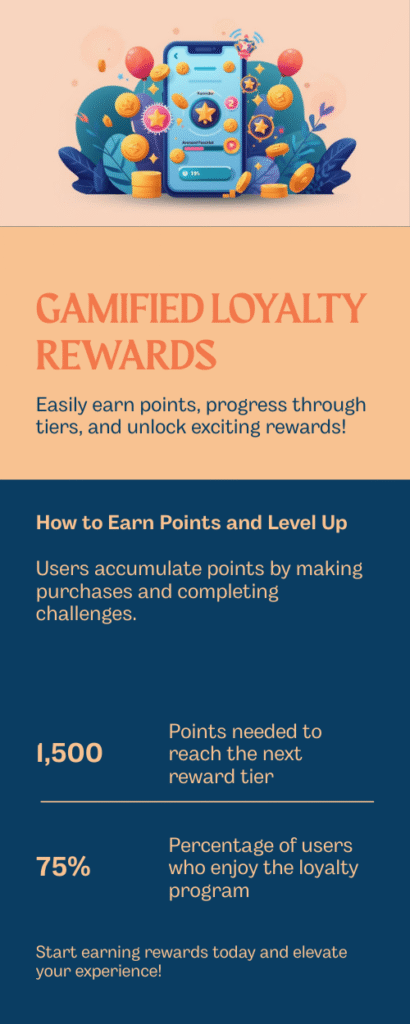
Conventional loyalty programs are usually based on delayed rewards, which are far and impersonal. Gamified loyalty transforms what happens by seeing progress and being involved. Tiered systems make users continue to go on and not end with the reward stop. Friction can be avoided with visual cues like progress bars that display the proximity of a user to the next benefit.
Time-limited challenges give short bursts of activities that do not overload the experience. A case in point is a renowned case of the global coffee brands that have turned regular buying into an interactive experience. The customers do not just gather the points; they are moving up the levels, they have temporary challenges, and they get some feedback that makes them continue playing.
In the long run, the strategy enhances the frequency of visits and emotional attachment. The point is that the rewards are perceived as warranted as opposed to random. When development is based on actual interaction, the loyalty is behavioural rather than just financial.
Quizzes as Engagement and Insight Tools
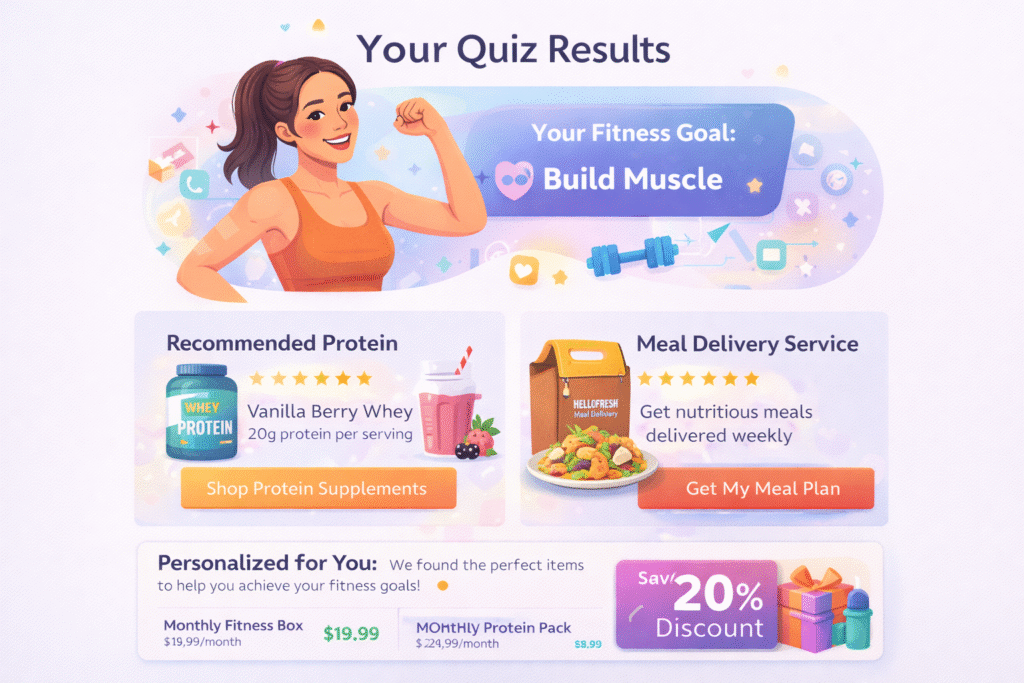
The interactive quizzes take a specific niche in the gamified marketing as they are both engaging and help in marketing. They will seem more like guidance rather than data collection when done properly. A quiz is one that a person would take because it offers insight.
Users provide their responses to questions since they anticipate that they will receive something of relevance. That expectation is strengthened by the result, which is either a recommendation or a personalized result. This interaction fosters trust and, at the same time, creates first-party information of value. As a matter of fact, quizzes usually perform better than fixed forms. When the user experience is made personal, users remain longer, interact more, and spread their findings.
Beauty, fitness, and lifestyle companies often employ quizzes in product selection, which helps in reducing choice overload and boosts conversion. Quizzes should be successful based on tone and clarity. Questions that are intrusive or results that are generic cause the engagement to decline shortly. Quizzes would be repeatable touchpoints when they feel personalized and respectful.
Engagement Loops and Habit Formation
The best gamified experiences are based on organised engagement loops that do not feel repetitive. Friction is minimized in these loops, as the interaction is thoroughly partitioned into small, rewarding steps that are easy to keep going on.
On a broader level, a majority of successful loops are similar in that they consist of the same basic structure: The obvious invitation to action, the action itself is easy to do, the reward is immediately evident, and the progressive advancement makes it easier to come back than to be compelled. It is not the complexity of the important mechanisms but the pace of the mechanisms.
In cases where feedback is too slow, motivation is lowered. Trust is broken when the rewards are not associated with effort. Tunes that are well adjusted do not interfere with attentiveness but promote continuity. This structure can convert infrequent customers in the business world into frequent ones. It promotes repetition of interaction in content platforms without perpetual newness.
A Practical Example From Retail
A fashion retailer has brought about light gamification in its online experience. Customers were getting points not only based on purchases, but also on the use of short style interactions. Early access to challenges was not in the form of heavy discounts, but monthly. Progress was always visible. Repeat purchases were on the rise significantly over a number of months.
The average order value increased among the engaged users, and the retention among the engaged users was higher when compared to the customers who had nothing to do with the system. The experience itself did not seem playful at the face of it.
It had been organized and satisfying. The effects were due to uniformity and not spectacle.
Designing Gamification With Restraint
Gamification, either under- or over-complicated, is a failure. Overloaded systems are full of mechanics that bewilder the users. Inconsequential rewards do not last long. The best implementations are the ones that are simple and in line with the set objectives.
Clarity of ethics is important as well. The users should know the reason why they are being rewarded and how the participation will be helpful to them. Avoiding fatigue and maintaining trust is achieved through transparency.
Balance is refined through measurement. The ability to track the repeat behavior, progression, and conversion over time will indicate the engagement loop that leads to long-term value or a short-term spike.
Gamification Across Channels
Gamified components are most effective when they are congruent amongst touchpoints. The mobile experiences tend to respond to frequent interaction. Internet environments like Web environments are advantageous in terms of progress indicators and interactive devices.
Email will work well to maintain momentum with light challenges or reward reminders. The social sites facilitate interaction through the exchange of participation. Channel consistency enhances familiarity and eliminates friction. Users experience continuity and not fragmentation.
Measuring What Actually Matters
The value of gamification appears in patterns rather than isolated actions. Instead of focusing on single clicks or redemptions, teams look at how behavior changes over time.
| Area of Measurement | What to Observe |
| Engagement | Frequency of return, time spent per session |
| Progress | Movement through tiers, challenges, or levels |
| Conversion | Purchases linked to gamified interactions |
| Retention | Repeat activity over weeks or months |
These signals reveal whether engagement loops support sustained value or only short-lived spikes. When progress continues and participation remains steady, gamification is doing its job.
Where Gamification Breaks Down
Gamification may be useless when rewards are empty, systems are over-complicated, or short-term incentives are exaggerated over the long-term value. Fairness matters.
Once there is a sense of imbalance or manipulation, users will not participate very fast. Effective systems develop over time and need not impose on the user’s behavior.
Looking Ahead
The idea of gamification will be less visible and more silent. The mechanics become invisible as the systems become more mature, and the experience is no longer as game-like but rather as a natural extension of the product itself. Users are not faced with clear points or difficulties, but with implicit cues of advancement, continuity, and acknowledgment that direct behavior without requiring focus.
This trend indicates a larger trend in online products. The most useful mechanisms hardly ever proclaim themselves. They are effective in that they resonate with the existing perceptions of effort, reward and momentum in people. The more we personalize, the more gamification will adapt to personal behavior, changing the level of difficulty, the speed of the game, and the reinforcements without set rules or apparent forms.
To marketers, this implies that the decisions of design will have a greater influence than the superficial aspects. The question will not revolve around the question of whether to add gamification, but how the interaction should be designed in such a way that the progress is perceived to matter and the participation is perceived to be voluntary.
Conclusion
Gamification in marketing works when it does not interfere with motivation, but observes it. Loops of engagement, loyalty programs, and quizzes have the most success when they bring about certain clarity and friction reduction and are genuinely rewarded in the long term.
Powerful systems are not based on spectacle and unceasing novelty. They depend on regularity, openness, and a sense of progress. Engagement becomes sustainable when the users are aware of what they are striving to achieve and when they have an awareness that their every action counts. In the case of marketers, gamification is more valuable in its structure. It transforms fragmented contacts into holistic experiences and single actions into relationships.
Used in moderation and purpose, gamification coordinates the user actions with the objectives of the business in a manner that is natural, lasting, and humanistic.
FAQs About Gamification in Marketing
What is gamification in marketing?
It is the use of game-like mechanics, such as points, badges, quizzes, or challenges, to motivate user engagement, loyalty, and conversion.
How do loyalty programs benefit from gamification?
Tiered rewards, progress tracking, and challenges make loyalty programs interactive and habit-forming, increasing retention and repeat purchases.
Can interactive quizzes improve conversion?
Yes, quizzes engage users, provide personalized recommendations, and can drive high conversion rates when designed effectively.
What are engagement loops in marketing?
Structured cycles of trigger, action, reward, and investment that encourage repeated interactions and habit formation.
Are there risks to gamifying marketing campaigns?
Yes. Poorly designed mechanics, overly complex systems, or superficial rewards can frustrate users and reduce participation.