
The moment you officially sign on a new client is pure euphoria. You can feel the ideas bubbling to the surface, and you are completely ready to get to work. In the midst of all that excitement, however, you just don’t end up doing one very important task: the freelance contract. Although it may feel like a formality, it is more important than that. A very solid contract freelance agreement changes an uncertain verbal agreement into a solid plan of action. The freelance contract protects your business and ensures that you are being paid appropriately for your work, while also immediately establishing trust with the client. If you don’t have a strong freelance contract, you are working on a handshake, and your income, time, and creative work are all completely at risk. Let’s develop why this is the single most important business document, and how to create a contract that works for you.
Why Your Business Demands a Contract Freelance Agreement
Think of your contract as a business insurance policy. It is your first and best defense against the most common and frustrating freelance challenges.
Eliminate Scope Creep and Unpaid Work
Scope creep is the slow, gradual expansion of a project beyond its original agreement. It is the number one profit-killer for freelancers. A detailed contract freelance agreement stops this in its tracks. Your “Scope of Work” clause clearly lists every deliverable, the number of revision rounds included, and what constitutes additional, billable work. This clarity prevents the “just one more thing” requests that eat into your time and profit.
Guarantee Timely and Full Payment
Your contract freelance document leaves no room for financial ambiguity. It explicitly states the total project fee, the payment schedule (such as a 50% deposit), invoice due dates, and late payment penalties. When these terms are in writing, clients treat them with more respect. This single step dramatically reduces payment delays and protects your cash flow, which is the lifeblood of your business.
Essential Clauses for Your Contract Freelance Toolkit
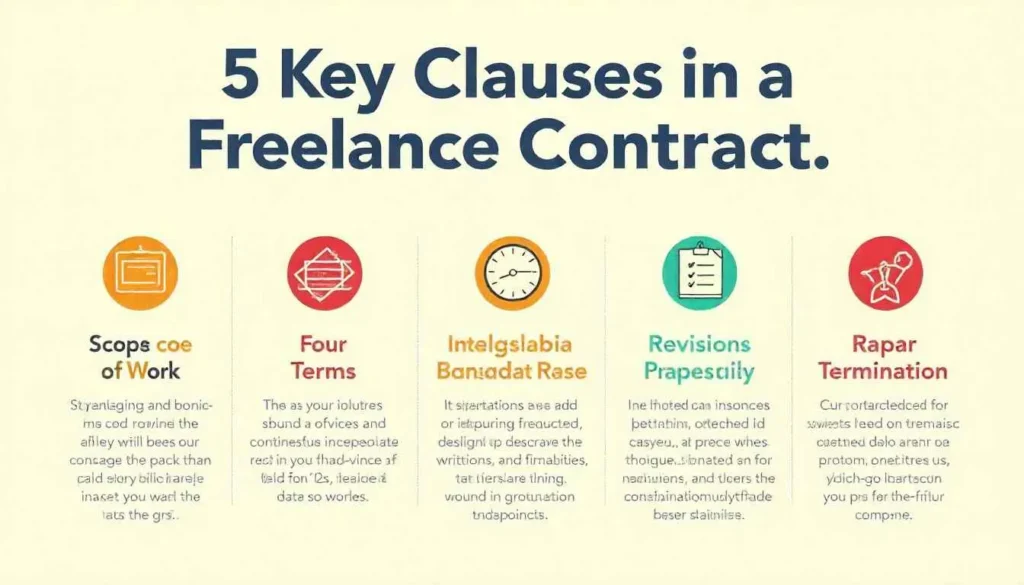
These are the non-negotiable components that every professional freelance agreement must include.
A Detailed Scope of Work and Deliverables
This is the heart of your contract. You must be incredibly specific. Do not just write “design a logo.” Instead, specify “delivery of three initial logo concepts, two rounds of revisions, and final files in PNG, JPG, and vector formats.” The more detail you provide, the less room there is for misunderstanding later.
Clear Payment Terms and Late Fee Policy
This section must be ironclad. It should clearly outline:
- Total Project Fee
- Deposit Amount (we recommend 30-50% upfront)
- Final Payment Due Date (e.g., upon delivery or within 14 days)
- Accepted Payment Methods
- Late Fee Structure (e.g., 1.5% monthly interest on overdue balances)
Intellectual Property and Rights Transfer
This clause is crucial for creative work. It states that you own the copyright to all work until you receive full and final payment. Only upon complete payment do the rights transfer to the client. This gives you significant leverage if a client refuses to pay for work already completed.
A Project Termination and Kill Fee Clause
What happens if the client cancels the project halfway through? A termination clause allows either party to end the agreement with written notice. A kill fee ensures you are paid for all work completed up to the termination date, protecting you from sudden project cancellations.
How to Implement Your Contract Freelance Process
Creating a great contract is only the first step. You need a consistent process for using it.
Customizing a Template for Each Client
Start with a solid contract freelance template, but never use it as-is for every project. Carefully tailor the “Scope of Work,” “Timeline,” and “Payment Terms” for each new client and project. This ensures the agreement accurately reflects your specific verbal discussions and promises.
The Professional Sign-Off Procedure
Always get a signed contract before you start any work. Use a professional e-signature service like DocuSign or PandaDoc. This creates a legally-binding record, is incredibly easy for the client, and signals that you run a modern, professional operation. No signed contract, no work; this should be a non-negotiable rule. For more on structuring your business, see the guide to setting your freelance rates
Navigating Common Contract Freelance Scenarios

Be prepared to use your contract to handle these common situations.
- A Client Asks for Work Outside the Scope: Politely refer them to the “Scope of Work” section in the signed agreement and provide a separate quote for the additional requests.
- A Payment is Late: Send a friendly reminder email with a copy of the contract, highlighting the late fee policy. The contract gives you the authority to enforce your terms.
- A Client Wants All Your Preliminary Work: Your IP clause should specify that you retain rights to unused concepts, sketches, and working files. Only the final, approved deliverables are transferred upon payment. For more on structuring your business, see the guide to gillibilli.shop.
Your Foundation for a Secure and Professional Business
More than a piece of paper, a freelance contract is your public statement of your professional values. It shows that you respect your work and your client’s investment. A strong contract freelancing process for each project can build a business based on sustained clarity, not ambiguity and anxiety. You will respect your time, creativity, and financial health. Commit today to never start working unless it is under the protection of this essential shield. Your business deserves this honor.
All images are generated by Freepik.
Frequently Asked Questions
Yes, a signed freelance contract is a legally binding agreement between two parties. It is considered valid when there is an offer, acceptance, and consideration (payment), and it is signed by both parties.
A client who refuses to sign a standard professional agreement is a major red flag. Politely explain that the contract protects both of you by ensuring clarity. If they still refuse, it is often safest to walk away from the project.
You can start with a high-quality template from a reputable source. However, for high-value projects or complex work, it is a wise investment to have a lawyer review your template to ensure it is legally sound in your jurisdiction.
A contract outlines the terms of the agreement before work begins. An invoice is a request for payment after work has been completed. You need both for a professional and secure workflow.
Yes. Even with a trusted repeat client, each new project should have its own contract or a separate Statement of Work (SOW) that defines the new scope, timeline, and payment terms.
Pingback: The Long-Term Freelance Worker: Building a Career Not Just a Gig